Akagera Safari Versus Murchison Falls: 7 Key Differences
An Akagera safari versus Murchison Falls decision usually comes down to time, budget, and what kind of wildlife story you want to tell. Both are Big Five parks. Both sit on major East African travel routes. But they differ in size, cost structure, and how established their predator populations actually are. Those differences matter more than a simple “bigger park wins” comparison suggests.
This guide walks through location, landscape, wildlife, cost, and activities side by side, then closes with a decision framework based on your itinerary rather than a generic recommendation.
How Far Is Akagera From Murchison Falls?
Akagera sits about two hours, roughly 110 km, east of Kigali on paved roads. That makes it workable as a day trip or an easy overnight. Murchison Falls is four to six hours from Kampala by road, a distance of around 305 km, or about an hour by flight to Pakuba airstrip. Akagera wins on convenience; Murchison Falls demands more logistics planning.
The two parks are in different countries, so they are rarely combined on one trip without a flight between Kigali and Entebbe. If your itinerary is already Rwanda-based, Akagera fits naturally alongside gorilla trekking in Volcanoes National Park. If you are building a Uganda circuit, Murchison Falls anchors the northern loop.
How Do Akagera and Murchison Falls Compare in Size?
Murchison Falls covers about 3,893 km² of savanna, riverine forest, and Nile River corridor, more than three times the size of Akagera’s roughly 1,122 km² of lakes, papyrus swamp, and low mountains in eastern Rwanda. The bigger park means more driving between sightings, while Akagera’s compact size concentrates wildlife encounters closer together.
That compactness is worth weighing carefully. A shorter game drive in Akagera can cover a meaningful share of the park’s habitat types in one loop. In Murchison Falls, reaching the Nile delta, the falls themselves, and the savanna plains often takes multiple driving days rather than one.
Does Akagera Have the Big Five?
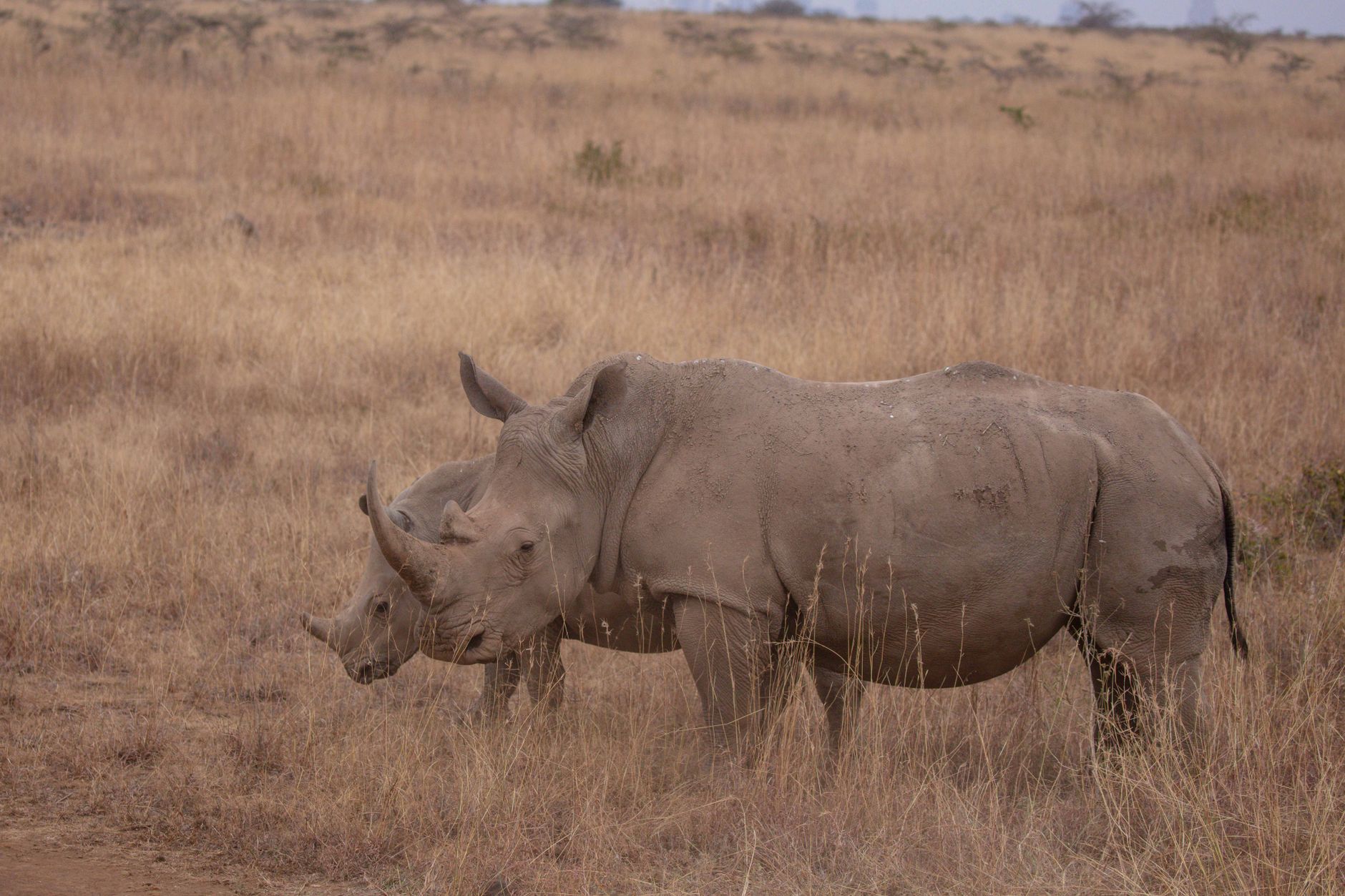
Yes. Akagera became a Big Five park after lions were reintroduced, with black rhinos following a few years later to join resident elephant, leopard, and buffalo populations. Because the lion and rhino numbers are still recovering, sightings can be less frequent than in longer-established Big Five parks like Murchison Falls.
That recovery timeline matters for anyone planning around predator sightings specifically. Akagera’s lions and rhinos are monitored closely, and guides there are generally candid about the odds on a given day rather than overselling them. If a park’s marketing claims specific sighting rates, it is worth verifying conservation claims before you build expectations around them.
Murchison Falls, by contrast, has a longer-established predator population and a broader species roster overall, including chimpanzees at Kaniyo Pabidi and Rothschild’s giraffe on the savanna plains north of the Nile. For travelers who want deeper species variety in one park, Murchison Falls generally delivers more on a single visit.
What Is Each Park’s Signature Attraction?
Murchison Falls’ namesake waterfall squeezes the entire Victoria Nile through a narrow gorge before dropping around 43 metres, best seen from a boat cruise approaching the base. Akagera has no single dramatic landmark; its signature experience is a Lake Ihema boat cruise past hippos, crocodiles, and dense shoreline birdlife instead.
Photographers tend to have strong opinions about which is more rewarding. The falls offer a dramatic wide shot and strong midday light off the spray. Lake Ihema rewards patience and a longer lens, since much of the birdlife sits along reed lines rather than open water. Either way, pack accordingly and check current airline baggage limits before departure.
What Is the Best Time to Visit Akagera National Park?
Akagera’s clearest game viewing falls in the June to September dry season, when animals cluster around water sources and dense vegetation thins out. A shorter secondary dry spell runs from December to February, though grass tends to be taller and sightings less open during those months.
Murchison Falls has two comparable dry windows, December through February and June through mid-October, when roads firm up and wildlife concentrates along the Nile’s floodplain. If birding is a priority alongside general game viewing, it’s worth checking the best month for Akagera birding separately, since migratory bird activity does not always track the same calendar as mammal visibility.
How Much Does an Akagera or Murchison Falls Safari Cost?
A mid-range Murchison Falls safari runs roughly $800 to $1,500 per person for two to three days, plus a $40 per day park fee. Mid-range Akagera trips cost about $350 to $700 per day, plus a steeper $100 per day entrance fee. Per-day totals end up broadly comparable despite the very different fee structures.
| Category | Akagera National Park | Murchison Falls National Park |
|---|---|---|
| Park size | About 1,122 km² | About 3,893 km² |
| Daily park entry fee | Around $100 per person | Around $40 per person |
| Distance from capital | About 110 km, 2 hours from Kigali | About 305 km, 4-6 hours from Kampala (or roughly 1 hour by air to Pakuba) |
| Mid-range daily package cost | Roughly $350-$700 per day (indicative range) | Roughly $270-$500 per day for a 2-3 day trip (indicative range) |
| Documented mammal species | Not separately published; Big Five park through reintroduction | 144 documented species |
| Documented bird species | Rich wetland and papyrus birdlife | 556 documented species |
| Signature attraction | Lake Ihema boat cruise | Nile gorge and waterfall boat cruise |
These are indicative ranges rather than fixed rates, since accommodation tier and vehicle type change the total significantly. For couples specifically, it’s worth reviewing Murchison Falls safari cost for couples before comparing quotes, since per-person pricing on shared vehicles can shift once you’re booking as a pair rather than a larger group.
What Activities Does Each Park Offer?
Both parks offer game drives and boat cruises, but Murchison Falls adds chimpanzee trekking at Kaniyo Pabidi, nearby hot air balloon flights, and Nile sportfishing. Akagera adds night game drives, behind-the-scenes rhino monitoring visits, and canoe trips through Lake Ihema’s papyrus channels, a quieter and more intimate activity mix overall.
If chimp trekking is a priority, Murchison Falls has the clear edge. If you’d rather pair a Big Five safari with gorilla trekking on the same trip, Akagera’s position within Rwanda makes that combination far simpler to arrange.
Akagera Safari Versus Murchison Falls: Which Fits Your Trip?
Neither park is universally better. Akagera suits travelers who want a compact Big Five park two hours from Kigali, often paired with gorilla or chimp trekking elsewhere in Rwanda. Murchison Falls suits those wanting a larger wilderness with a dramatic waterfall and deeper primate variety within a longer Uganda itinerary.
Use this rough decision matrix:
- Short on time, already in Rwanda: choose Akagera and combine it with a gorilla trek.
- Building a longer Uganda circuit: choose Murchison Falls and add a chimp trek at Kaniyo Pabidi.
- Traveling with a large group that wants a lot of ground covered: Murchison Falls’ size gives more room to spread out.
- Prioritizing a tight, efficient game-viewing loop over a few days: Akagera’s smaller footprint works in your favor.
- Chasing predator density specifically: Murchison Falls’ longer-established population currently offers more consistent sightings than Akagera’s still-recovering lions and rhinos.
Anyone weighing options across the wider region might also compare general patterns in the Masai Mara versus Amboseli matchup, since the same time-budget-versus-species-depth logic applies across East Africa’s parks, not just Rwanda and Uganda.
Frequently Asked Questions
Which is better, Akagera or Murchison Falls?
Neither is universally better. Akagera suits travelers who want a compact Big Five park two hours from Kigali, often paired with gorilla or chimp trekking, while Murchison Falls suits those wanting a larger wilderness with a dramatic waterfall and deeper primate variety. Choose based on your itinerary’s time budget and whether you’re already in Rwanda or Uganda.
Does Akagera have the Big Five?
Yes. Akagera became a Big Five park after lions were reintroduced, with black rhinos following a few years later, joining existing elephant, leopard, and buffalo populations. Because the lion and rhino populations are still recovering, sightings can be less frequent than in longer-established Big Five parks.
How far is Akagera from Murchison Falls?
Akagera, in Rwanda, and Murchison Falls, in Uganda, are in different countries and aren’t typically visited on the same trip without a flight between Kigali and Entebbe. Akagera is about two hours from Kigali, while Murchison Falls is four to six hours from Kampala by road or about an hour by flight to Pakuba airstrip.
What is the best time to visit Akagera National Park?
The dry season from June to September offers the clearest game viewing in Akagera, as animals cluster around water sources and dense vegetation thins out. A shorter secondary dry spell from December to February is also workable, though grass tends to be taller during those months.
Is Murchison Falls worth visiting?
Yes. Murchison Falls combines Big Five game drives with a boat cruise to the base of the falls, chimpanzee trekking at Kaniyo Pabidi, and one of Uganda’s higher documented mammal and bird counts, 144 mammal species and 556 bird species. The park’s size rewards a longer stay better than a quick day trip.
Compare Your Options Before You Book
Akagera and Murchison Falls each reward a different kind of traveler, and the right choice depends on your route, group size, and how much predator density matters to you. Before locking in dates, it’s worth checking east-africa-safari-travel-insurance-exclusions so cross-border logistics don’t catch you off guard.
When you’re ready to see real itineraries and pricing side by side, compare safari operators through FindMySafari, Valley Safaris, or Trunktrails Safaris, and browse packages that match the park, season, and group size you’ve settled on.
More safari planning resources
- Masai Mara Big Five safari from SafariPure
- Ol Pejeta Conservancy guide from Trunktrails Safaris
- Best time to visit Kenya month-by-month map from Valley Safaris
- Big Five safari collection on FindMySafari